
How Much Value Will AI Create?, Politics Vs. Patriotism? California Tax-Attack.

Thanks for reading.
Welcome to Different.
Musings for entrepreneurs, marketers, and category designers with a different mind. By Christopher Lochhead.
Subscribe to our real newsletter Category Pirates.
Check out our new podcast. The Pirate Street Journal.
The Wall Street Journal covers companies.
🏴☠️

How Much Value Will AI Create?
The internet created $55 trillion in economic value.
From nothing.
New categories that didn’t exist. Which created more new categories.
Now run the math on AI.
Scenario 1: AI matches the internet.
World GDP today: $110 trillion. If AI creates the same proportional value as the internet, that’s $55 trillion in new economic value over the next 30 years.
Created from nothing.
Scenario 2: AI is twice the internet.
That’s $110 trillion in new value.
An entire second world economy. Stacked on top of the one we have.
Sounds crazy?
Goldman Sachs projects AI lifts global GDP 7% in ten years. PwC says $15.7 trillion by 2030. McKinsey says $2.6 to $4.4 trillion in new value.
Every year.
Compounding.
Here’s what most people miss: the internet didn’t reduce demand for communication, commerce, and information. It exploded demand.
AI will do the same for intelligence.
The pessimists sound smart. The optimists get rich building the future the pessimists said was impossible.
Sharing a quadrillion-dollar pie beats sharing a trillion-dollar pie.
For 25 Predictions about the future check out Category Pirates.
🏴☠️
Politics and Patriotism?
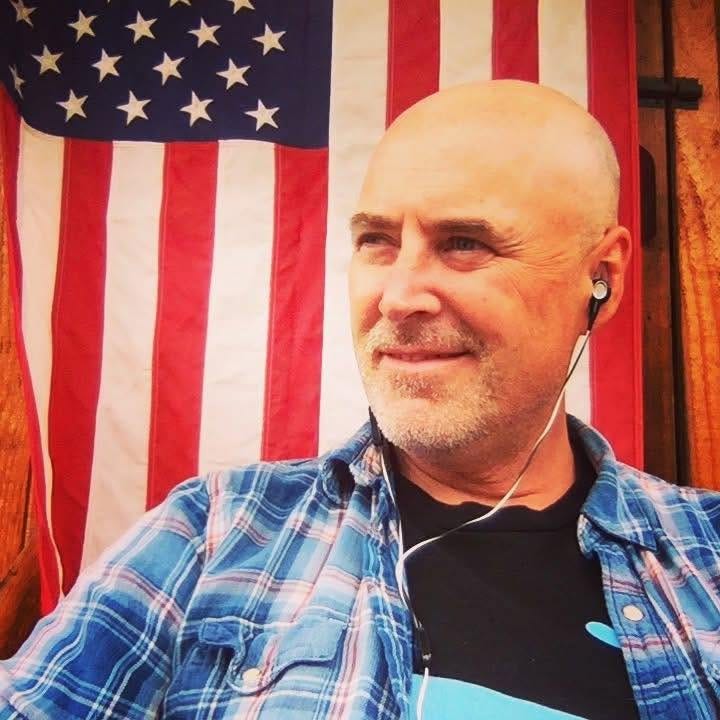
I find it fascinating that people conflate politics and patriotism. My love of America has nothing to do with who is in the White House. It never has. It never will.
I love this country because a kid who failed out of school at 18 with nothing could come here from Canada and build something legendary.
That happened under Republicans.
That happened under Democrats.
It happened because of America.
Not because of any politician.
Gratitude for this country is not a political position.
It is a human one.
300 million people live here.
170 million more want to.
Not because of who is president.
Because of what America is.
A place where anyone can come from nothing and build something legendary.
That is not a left thing.
That is not a right thing.
That is an American thing.
It has been true for 250 years.
And it will be true for 250 more.
🇺🇸
We just published 25 predictions for America’s future.
And.
As Nobel Prize-winning physicist Niels Bohr put it: “Prediction is very difficult, especially if it’s about the future.”
🏴☠️
California took 75% more of your money in a decade. Now, largest tax raise ever.
Name one person who took their way to greatness.
One company. One state. One civilization.
Take your time.
I’ll wait.
😎
Of course you can’t. Greatness is made. And makers make it.
Which brings us to California. The state that built the greatest maker economy in human history is now running a real-time experiment in what happens when you drive the makers out.
The results are in. Sacramento’s answer is to double down.
The Paradox, In Reverse
In 1865, economist William Stanley Jevons noticed something strange: when steam engines got more efficient, Britain didn’t burn less coal. It burned radically more. Because cheaper power created demand nobody had imagined.
That’s the Jevons Paradox.
It’s why the AI revolution produces a jobs boom, not a jobs apocalypse.
Abundance compounds.
(So does stupidity)
Here’s what nobody talks about. The paradox has a reverse gear.
When making things gets more expensive, you don’t get less making. You get exponentially less.
Because every maker who leaves doesn’t take one tax return.
They take the company they would have started. The forty people they would have hired. The next maker they would have funded.
Every dollar of it. Every year. Forever.
That’s Reverse Jevons. Scarcity is a flywheel too. It just spins the other way.
California is the proof.
After Increasing Taxes 75%, California Is Increasing Taxes
The IRS tracks exactly this: taxpayer income, moving across state lines, one return at a time.
In 2022, California lost a net $29.1 billion in adjusted gross income to other states. The largest one-year income loss by any U.S. state in the more than 30 years the IRS has tracked interstate migration.
That was nuts.
Now it’s even more nuts.
Because it’s a flywheel of stupid.
The income that left in 2020 didn’t come back in 2021. It kept earning in Texas. Stack the losses the way an accountant would, and California’s cumulative income loss from 2020 to 2023 is roughly $223 billion.
And net out-migration has roughly doubled since 2019, to about 300,000 people a year.
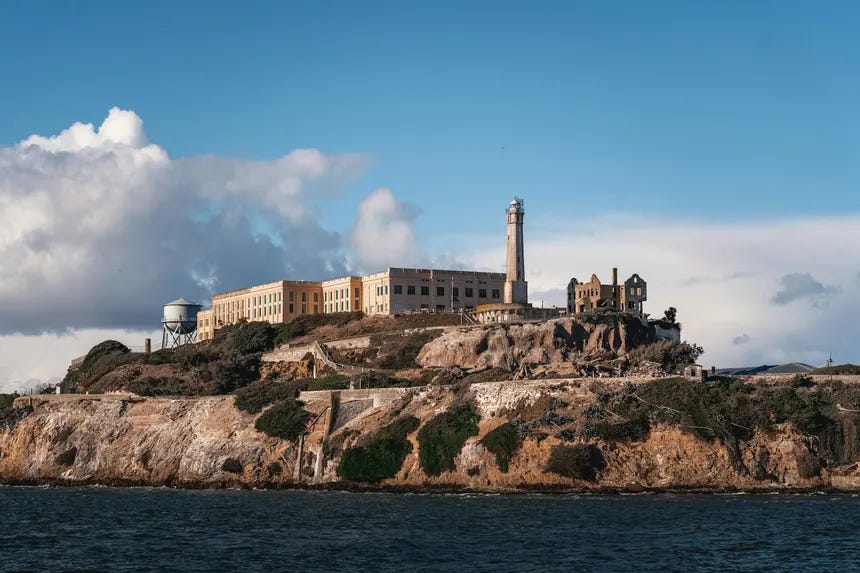
Economist Art Laffer, looking at those numbers: “Once you leave Alcatraz, you’re not coming back.”
And it’s not who’s leaving. It’s what they make. The state’s own analysts found that foregone tax revenue from out-migration tripled while the number of people leaving only doubled.
Read that again.
Where are they going?
Texas.
Florida.
Nevada.
Arizona.
Three of the four have no income tax.
This is called signal.
Makers are the most valuable (most mobile) people in the economy. Which means California isn’t taxing a captive audience. It’s taxing its best customers.
And its best customers are churning.
The Legends Are Leaving
A company is a maker at scale. When a headquarters leaves, the ecosystem leaves with it: the jobs, the vendors, the spin-offs, the gravity.
The Hoover Institution counted 352 corporate headquarters leaving California in just four years.
Look at the list.
Chevron. Born in California in 1879 as Standard Oil of California. The company was literally named after the state. Gone to Houston.
Hewlett Packard Enterprise. HP started in a Palo Alto garage in 1939. There’s a plaque on that garage. It reads “Birthplace of Silicon Valley.” The company that started Silicon Valley left Silicon Valley.
Tesla. Oracle. SpaceX. Charles Schwab. Palantir. McKesson.
And then there’s In-N-Out.
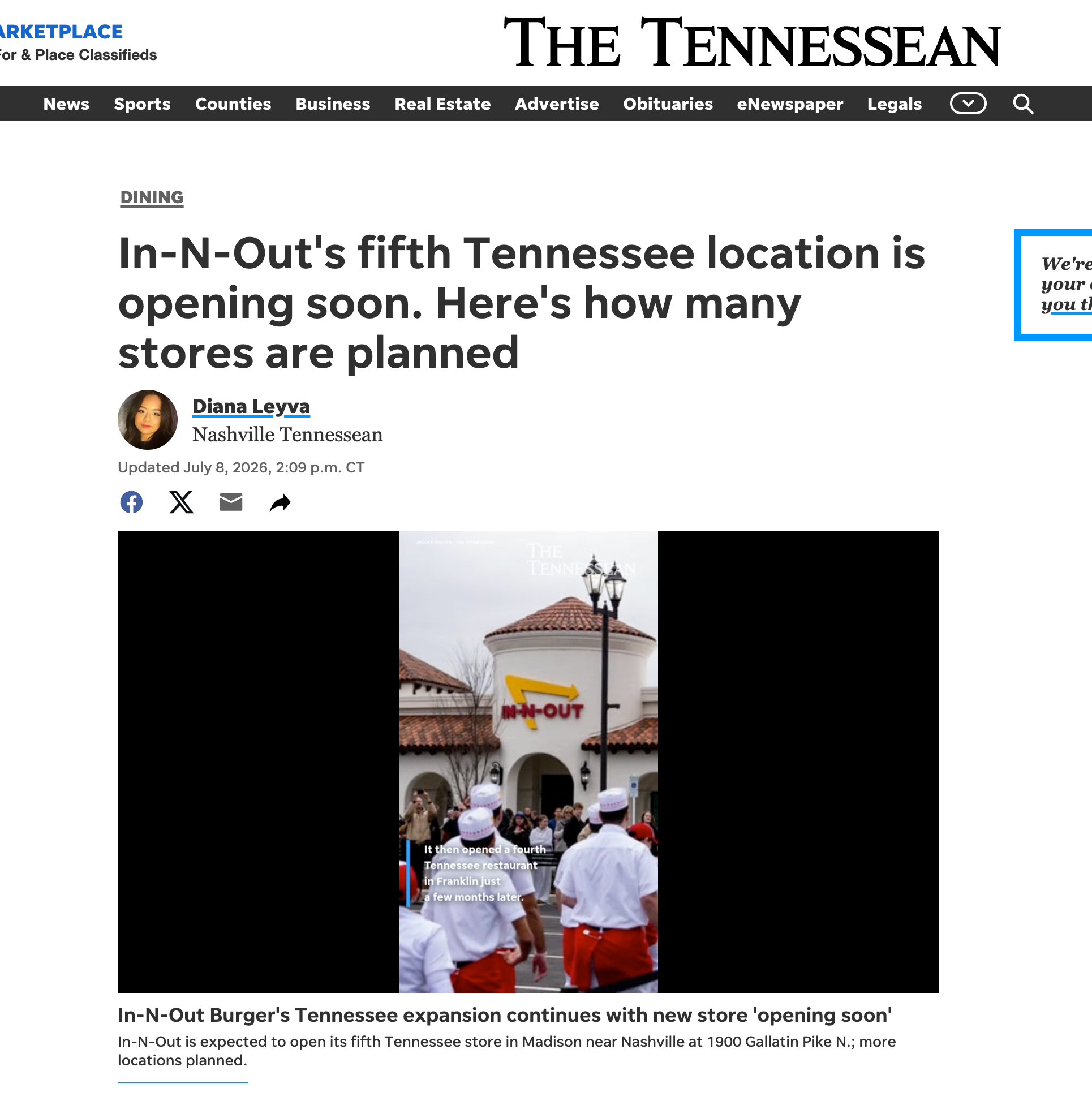
If California were a religion, In-N-Out would be its communion. In 2025, president Lynsi Snyder, granddaughter of the founders, moved her family to Tennessee and opened an eastern headquarters, saying it had become too difficult to raise a family and run a business in California.
When Double-Double money starts hedging its California exposure, the flywheel isn’t theoretical anymore.
Sacramento’s defenders note that only about 2% of the state’s headquarters left over the decade.
They are missing the narrative.
It’s not how many logos leave.
It’s which logos.
Chevron, HP, Tesla, Oracle, and Schwab are anchor tenants. And everyone knows what happens to a mall after the anchor tenants leave.
The category kings are leaving the category kingdom.
That’s not churn.
That’s a collapse.
Forking Away From The Future
“A great civilization is not conquered from without,
until it has destroyed itself from within.”
-Will Durant
The makers are leaving. The legends are leaving. The state’s own analysts are publishing the exit data. Any executuive looking at that dashboard faces two paths.
Path one: cut prices and improve the product. Tax cuts. Building incentives. Permitting reform. A signal to every maker in America: come here, build here, we want you.
Path two: raise prices on the customers who haven’t left yet.
Sacramento didn’t hesitate.
Fresh off collecting 75% more total tax revenue than a decade ago.
California just passed the largest budget in state history:
From $140 billion to a projected $245 billion in ten years. And California just passed the largest budget in state history: $352 billion, with $13 billion in new taxes.
A tax on health insurance.
A cap on R&D credits.
A sales tax on software.
(The home of Silicon Valley is taxing software.)
Notice what’s not on the list.
Not one tax cut.
Not one incentive to build.
Not one reason for a maker to come or to stay.
They didn’t just skip path one. They capped the R&D credit, the single most direct incentive to create things in California.
Sacramento looked at a decade of maker exodus. And concluded the remaining makers aren’t paying enough.
Now Comes The Asset Tax
(On Your Assets)
That was the appetizer. November’s ballot is the main course.
A 5% levy on the total net worth of Californians worth over $1 billion.
Not what you earn.
What you own.
Everything already built, assessed, priced, and sliced by the state. And since almost nobody holds 5% of their net worth in cash, the state is effectively forcing the liquidation of assets.
Call it what it is: an asset seizure tax.
Sacramento makes three claims.
It’s one-time.
It’s billionaires-only.
It’ll raise $100 billion.
All three.
A lie.
Not one-time. Stanford Hoover’s Joshua Rauh:
“This tax is billed as one-time.
But why would anybody believe it’s a one-time tax?”
Not billionaires-only.
To pass it, the state must remove the constitutional cap that currently prevents California from taxing intangible personal property.
Your stocks.
Your business stake.
Your intellectual capital.
That cap protects everyone today. Hoover calls what replaces it “constitutional infrastructure for future wealth taxes.”
Taxes expire. Legal architecture doesn’t.
And it won’t fuckin’ work.
California’s own Legislative Analysts concluded the tax would cause an ongoing decrease in income tax revenue of hundreds of millions per year.
Stanford went further: six publicly confirmed billionaire departures, including Larry Page, Sergey Brin, and Peter Thiel, have already removed an estimated $536 billion from the proposed tax base.
Nearly 30% of it.
Before the measure even reached the ballot.
Net result of the tax, per Stanford: negative $24.7 billion. Under most of their scenarios, California ends up poorer.
The state’s own referees scored the game before kickoff. The state loses.
Why The Future Sucks For California
The billionaires leave first, because they can afford to and because they already are. The revenue comes in at half the promise.
The deficit remains.
Because it was never a revenue problem.
And Sacramento, now holding constitutional permission to tax assets, does the only thing it has ever proved it knows how to do.
It drops the threshold.
A billion becomes a hundred million.
A hundred million becomes ten.
Founders leave before their cap table crosses the line.
Every startup employee with stock options starts doing the math.
The next Nvidia incorporates in Austin on day one. Because no maker builds where the state prices the dream before it pays out.
And every builder still in California asks the only question that matters: if I build something legendary here, will the state assess its value before I’ve seen a dollar?
Each departure triggers the next hike. Each hike triggers the next departure. The Reverse Jevons at full speed. Exits propped open. Law bolted shut.
Want to see the ending? Drive east.
New York lost nearly a million residents since 2020. Governor Kathy Hochul, who once told New Yorkers she disagreed with to jump on a bus to Florida, now says she should go to Palm Beach to see who she can bring back home. Because the tax base has been eroded.
New York is California’s Ghost of Christmas Future.
Except California is choosing it with both eyes open.
It is time to stop electing these people.
The Honest Part
In any single year, the income leaving California is less than 1% of the state’s total. Sacramento’s defenders say out-migration barely dented recent revenue.
They’re right.
And they’re missing the entire point.
Flywheels never look dangerous in year one. Jevons’ coal demand compounded for decades. A 1% annual loss that never comes back, stacked on last year’s 1% that never came back, taken disproportionately from your highest earners, in the state most dependent on high earners in America, is not a rounding error.
It’s a trajectory.
Powered by a simple machine: collect a boom windfall, spend it like it’s permanent, and when it fades, raise taxes to protect the spending.
The Net/Net
Strip away the politics and look at this like an executive.
California is a product.
39 million customers.
The highest prices in the category.
A legendary brand.
And net churn concentrated among its highest-value customers, with management responding by raising prices on the ones who haven’t left yet.
There isn’t a board in America that would keep that CEO.
California doesn’t have a revenue problem.
It collected 75% more this decade than last.
California has a spending problem. A waste and fraud problem.
A maker problem.
And its answer is more taxes.
Not incentives to create. Not incentives to build. More taxes. On what you earn today. And soon, on everything you own.
Drive out the makers, and you’re left with the takers.
And no one.
In the history of anything.
Ever took their way to greatness.
🏴☠️
Shalom my Pirate friend,
👊🏴☠️🙏
Read Category Pirates
(Our real newsletter)
The creator of this Different Newsletter failed cutting & folding in kindergarten.
Copyright Category Pirates, LLC
*Sources: IRS Statistics of Income migration data; California Legislative Analyst’s Office; California Governor’s Budget (Schedule 2); Stanford Hoover Institution; Center for Jobs and the Economy; Orange County Business Journal; CNBC; CalMatters; PPIC; The Real Deal; IBTimes; Buildremote. Validated with Claude, ChatGPT, Google, Grok &/or Gemini*

Driving slowly in the passing (left) lane in the USA comes with a sentance of 50 yrs in jail. And daily genital tasing.
Sale of Interests in Big Foot Oil and Gas Asset in the U.S. Gulf of Mexico
Man claims he found the first scientifically verified Bigfoot specimen
All the confirmed Loch Ness Monster sightings in 2026
Museum honors a late artist by covering its floor in enough peanut butter to make 15,000 sandwiches
Fort Wayne man accused of cutting off his genitals and using them to commit arson
“So how exactly... and I’m asking this as a friend... do you cut off your... johnson?”
“Yes.”
“Yes what?”
“Yes, how exactly. That’s the question.”
“That’s not... no. No, see, that’s not even my question. That’s the question BEFORE my question. My question lives further down the road.”
“There’s more road?”
“He set it on fire.”
“What!?”
“I read the article.”
“It says he poured gasoline. On it.”
“Which means... okay, walk with me here...”
“At some point this man is standing in a garage. Two in the morning. And he looks down at the... at his item. And a thought forms.”
“I need an accelerant.”
“Well, it wouldn’t just catch.”
“I’m just saying. Biologically. It’s mostly water.”
“How do you know the flammability level of your dingle-donger?”
“I’m a details guy.”
“Then why. Would you think…. What could POSSIBLY make you think. That your johnson. Is a fire starter”?
“It’s not kindling. Nobody’s out camping going, ‘Dang, we forgot the matches, well, fellas, I guess there’s one option.’”
“Maybe he was cold.”
“It was May. In Indiana.”
“Fort Wayne gets a chill.”
“Not THAT kind of chill!”
“There is no temperature. NO temperature. Where a man looks around a garage full of normal flammable garage things... newspapers, cardboard, oily rags... and goes, ‘Nah.’”
“I got a better idea!
“...They found four lighters.”
“I saw that.”
“Four.”
“You know what four lighters means?”
“🍆It means the first three didn’t take!”
“It means there was a moment, maybe several moments, where this project was NOT WORKING, and instead of reading that as a sign from God, he went back to the junk drawer.”
“That’s commitment.”
“That’s the WRONG word for what that.”
“And here’s my thing. He walks out. Finds the police. And tells them a whole story. ‘I got stabbed. Downtown. A guy threatened me yesterday.’ A full screenplay. Characters. A timeline. Foreshadowing.”
“Solid story.”
“GREAT story! Believable! Stabbings happen! And then he gets to the hospital and goes... ‘Officer. I haven’t been honest with you.’”
“A crisis of conscience.”
“In the ER. That’s when the integrity kicks in. Not before the knife. Not at the gas can. Not between lighters two and three, which, LOTS of time to reflect there. No. He waits until he’s in a gown with his business in the wind, and goes, ‘I owe you the truth.’”
“And the truth needed a whiteboard.”
“The truth needed a whiteboard, a laser pointer, and a support spirit animal.”
“...Says here they charged him with arson.”
“Arson.”
“Twelve years, potentially.”
“So the State of Indiana. Looked at this entire evening. The knife. The garage. The gasoline. The four lighters. The fake stabbing. The real... event. They reviewed ALL of it. And their number one concern. Was the fire code.”
“Well. The garage is the victim.”
“The garage is NOT the victim.”
“The garage didn’t ask for any of this.”
“NOBODY asked for any of this! The garage, at least, is insured!”
“I’m not sure if you can insure your johnson?”
“How about, just do NOT light it on fire!”

🏴☠️
Sent on a Friday to mimimize readership.
🏴☠️